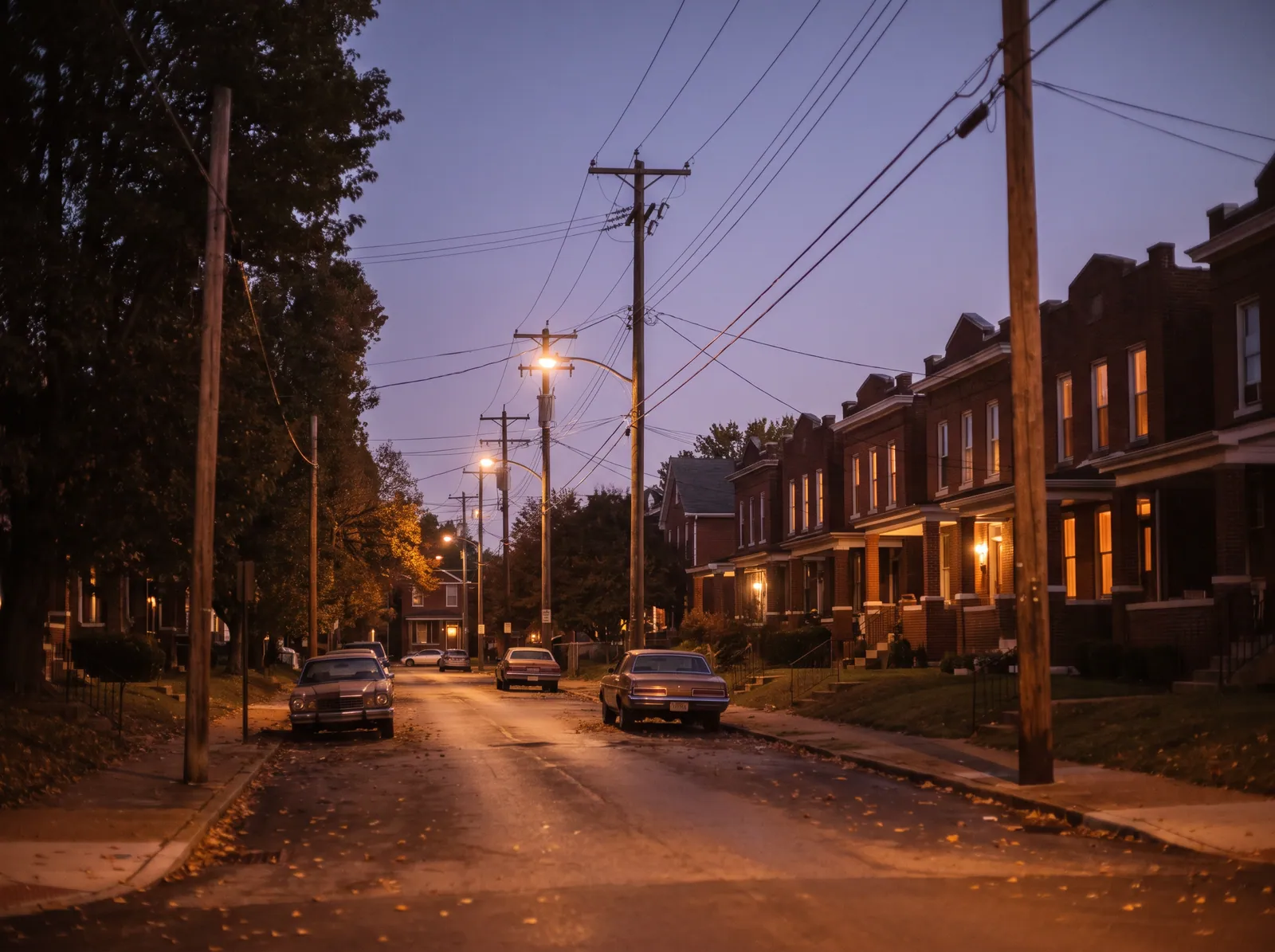

Behind every light switch is a power plant that may be hundreds of miles away. This guide follows your power from the plant to your outlet, and shows where each step lands on your bill. For more, see our guides to how energy works.
How does the power grid work?
The grid is a network of power plants, wires and control rooms. It makes electricity and gets it to you the moment you need it. It’s easier to picture as a restaurant, so here are its five main parts.
Power plants are the kitchens
Every kitchen cooks the same dish, electricity, from different ingredients: gas, wind, sun, water, coal or uranium.In real life
US power plants made about 4.4 trillion kilowatt-hours (kWh) in 2025.[4]
Wires are the roads
Long-distance lines are the highways, and they carry a lot of power a long way. Local lines are the streets that end at your door.In real life
The US has thousands of miles of long-distance lines and millions of miles of local ones.[1]
Grid operators are air traffic control
They don’t make the power, and they don’t own most of the roads. They watch everything that’s moving and keep it from colliding.In real life
They keep the power made and the power used in balance, moment by moment.[2]
Batteries are the pantry
Grid batteries store extra power when there’s plenty of it, like at midday when the sun is strong, and hand it back later.In real life
Companies plan to add 24 gigawatts of big grid batteries in 2026.[5]
Your home is the dinner table
This is where everything ends up. The meter by your door counts everything that’s served.In real life
The average US home used about 899 kWh a month in 2022.[6]
Where does US electricity come from?
More US electricity comes from natural gas than from any other source, followed by renewables, nuclear and coal. Here’s the mix from big power plants in 2025.[4]
Natural gas
- Share of US electricity
- 41%
Renewables (wind, sun, water and plants)
- Share of US electricity
- 24%
Nuclear
- Share of US electricity
- 18%
Coal
- Share of US electricity
- 17%
Oil and other
- Share of US electricity
- Less than 1%
Where do renewables and community solar fit?
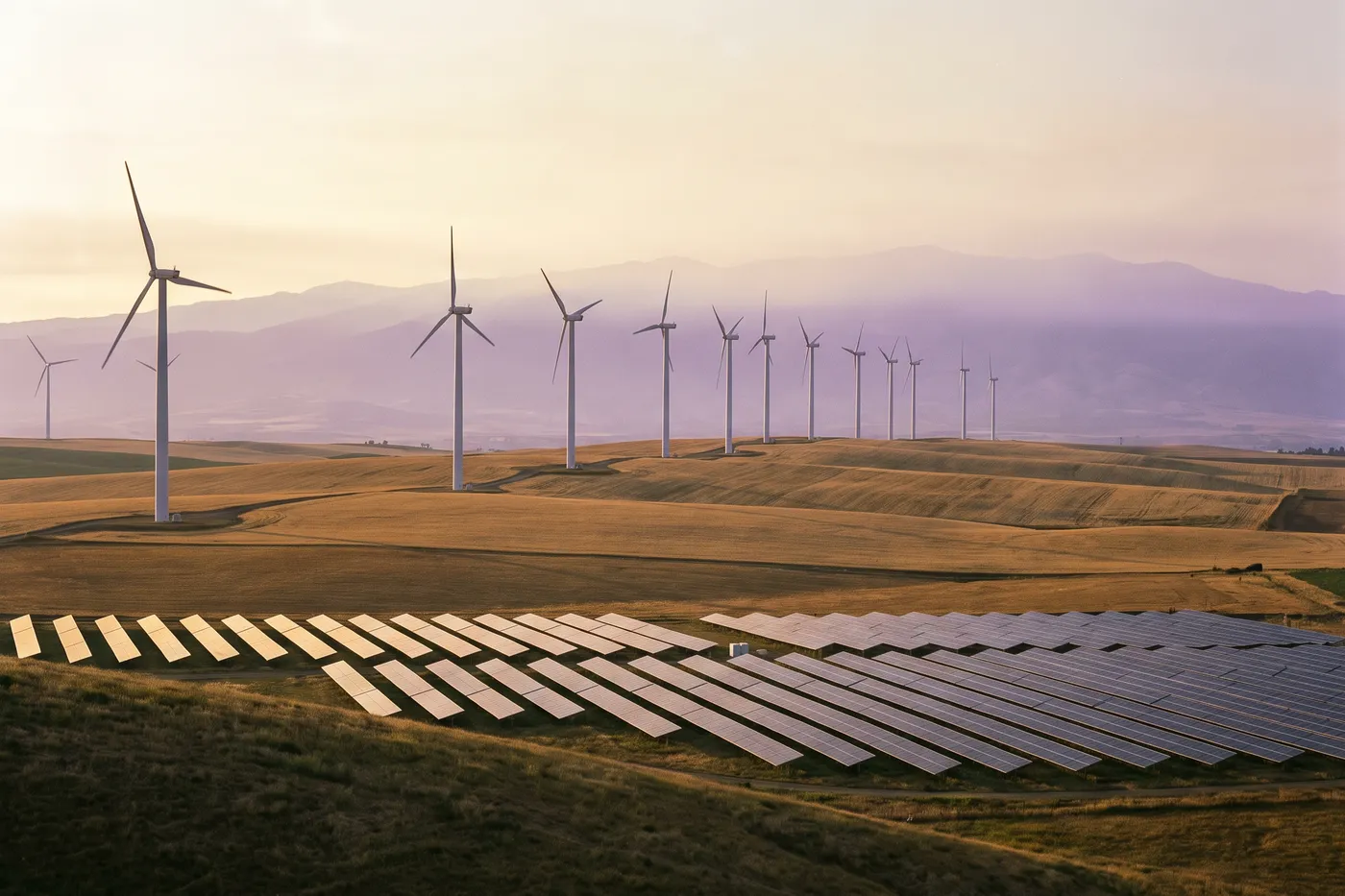
Solar and wind farms feed the same grid as every other plant. Of all the new power planned for 2026, about half is solar.[5]
Rooftop panels aren’t an option for everyone. Nearly half of homes and businesses can’t put solar on their roof, often because they rent. Community solar lets you sign up for a share of a nearby solar project instead, and your share earns a credit on your regular electric bill.[7]
How does electricity get to your home?
Electricity reaches your home over two kinds of wires: long-distance lines and local lines. Each part of the trip shows up somewhere on your bill.
Transmission vs. distribution: what’s the difference?
Transmission is the long-distance part. It runs at very high voltage, because that moves power long distances more cheaply.[1]
Distribution is the local part, where the voltage comes down until it’s safe to use at home.[1] Your local utility owns and fixes these lines.[8]
Follow a kilowatt-hour
From power plant to outlet
Power plant: it’s made
A generator spins, or a solar panel soaks up sunlight, and makes electricity. It most likely came from natural gas, the biggest source of US power.[4]
On your bill
Supply charges
Substation: the voltage comes down
A substation lowers the voltage for the local lines.[9]
On your bill
Delivery charges
Meter: it’s counted
Your meter counts how many kWh you use. One kWh runs a typical window air conditioner for about an hour.[3] Some apartments share a meter, so here’s how master, direct and submetering work.
On your bill
Your usage. Supply and delivery charges are both based on it.
Who runs the power grid?
No single company runs the US grid. It’s split into three big regional grids, and inside each one, several groups share the work.
Is the US one big grid?
No. The lower 48 states run on three main grids. They mostly run on their own and share only a little power with each other.[2]
Eastern
- What it covers
- East of the Rocky Mountains, except most of Texas[1]
Western
- What it covers
- From the Rockies to the West Coast[1]
Texas (ERCOT)
Who does what?
Power plant owners
- What they do
- Make electricity and sell it
- When you’ll deal with them
- Not directly
Grid operators
Your local utility
- What they do
- Owns and fixes the poles, wires and meter at your home[8]
- When you’ll deal with them
- When you start service, pay for delivery or lose power
Federal regulators (FERC)
- What they do
- Oversee power lines between states and big power sales between companies[15]
- When you’ll deal with them
- Not directly
Your state utility commission
- What they do
- Approves your utility’s rates[15]
- When you’ll deal with them
- When your delivery rates change
The big grid operators run the system for about two-thirds of the country’s power. In much of the Southeast, Southwest and Northwest, utilities run their own systems instead.[11]
How does the grid show up on your bill?
Your bill pays for two main things: supply, the electricity itself, and delivery, the poles and wires that bring it to you.[16,3] In states with energy choice, you can pick a supplier, but your local utility still delivers the power.[16,17] Our guide to supply and delivery charges explains what each part pays for.
Why do electricity prices go up and down?
Prices usually change because making electricity, the biggest part of what it costs, gets cheaper or more expensive.[18]
- Fuel costs: natural gas makes more US power than any other source,[4] so when its price rises, electricity prices tend to rise too.[18]
- Busy times: use is usually highest in the afternoon and early evening, when the grid has to run pricier plants. Prices are usually highest in summer.[18]
- Weather: heat waves and cold snaps push use up, and droughts or calm winds can cut cheaper water and wind power.[18]
- The wires: building and fixing the grid, including after storms, adds cost.[18] Your utility’s delivery rates change when regulators approve new ones.[19]
Power-market prices change minute by minute, but most homes pay a rate based on seasonal averages. In 2025, US homes paid about 17.3¢ per kWh on average.[18] Some utilities charge more at busy hours and less at quiet ones, so people move their use to cheaper times.[18]
What causes a power outage, and who fixes it?
Most outages are local, and your utility fixes them.[8] A storm brings down a line, a tree hits a pole, or a transformer fails. If your lights flicker first, here’s why lights flicker during storms and outages.
In 2024, US homes and businesses went about 11 hours without power on average, the most in 10 years. Major events, like Hurricanes Beryl, Helene and Milton, caused about 80% of that time. In a typical year, smaller outages add up to about two hours.[20]
Who do you call when the power goes out?
Check whether it’s only you
If the neighbors have power, check your breaker panel.
Stay away from downed lines
Keep clear of them, and report them to the utility right away.
What are rotating outages?
Rotating outages are short, planned outages that a grid operator orders when the whole grid runs short of power. ERCOT uses them only as a last resort, after asking people to save power and trying emergency steps.[14]
How long each one lasts depends on your local utility, the event and the weather. It can be anywhere from about 10 minutes to an hour or more.[14]
How Public Grid helps
Your utility keeps the wires up, and Public Grid works on the supply side of your bill. Where there’s energy choice, we compare supply rates and look for a lower one, and we check for community solar near you. We earn money through referrals from our energy partners when we connect you to their programs.
Common questions
No. Switching suppliers changes who you buy electricity from, not the wires it travels on. Your local utility still delivers your power, keeps up the lines and handles outages. Illinois’s consumer site, for example, says your service isn’t interrupted, and you still call your utility in an outage.
A kilowatt-hour (kWh) is the unit your electricity use is measured in, and it’s what your bill charges you for. One kWh runs a typical window air conditioner for about an hour. The average US home used about 899 kWh a month in 2022.
Not exactly. All of a region’s plants feed the same wires, so the power at your outlet comes from whatever plants are running on your part of the grid at that moment. That’s why your home’s mix depends on where you live, not on which plant is nearest.
It depends on your state. In states with energy choice, including parts of Texas, you can pick the company that supplies your power. Elsewhere, your utility supplies it. In some areas, you can also join a community solar project and get a credit on your bill.
Sources · 20
- 1Electricity explained: How electricity is delivered to consumers · U.S. Energy Information Administration
- 2U.S. electric system is made up of interconnections and balancing authorities (July 20, 2016) · U.S. Energy Information Administration, Today in Energy
- 3Renting your first apartment in Chicago? Here’s how to read your utility bills (June 27, 2025) · Citizens Utility Board
- 4Electricity explained: Electricity in the United States · U.S. Energy Information Administration
- 5New U.S. electric generating capacity expected to reach a record high in 2026 (February 20, 2026) · U.S. Energy Information Administration, Today in Energy
Show all 20Show fewer
- 6How much electricity does an American home use? · U.S. Energy Information Administration
- 7Community Solar Basics · U.S. Department of Energy, Solar Energy Technologies Office
- 8Switching Process · Plug In Illinois (Illinois Commerce Commission)
- 9How the System Works (poster) · AEP Ohio
- 10How much electricity is lost in electricity transmission and distribution in the United States? · U.S. Energy Information Administration
- 11Electric Power Markets: National Overview · Federal Energy Regulatory Commission
- 12About ERCOT · Electric Reliability Council of Texas
- 13Energy · Hawaii Public Utilities Commission
- 14Trending Topics: Using load shed to address shortages in the generation supply (August 9, 2024) · Electric Reliability Council of Texas
- 15What FERC Does · Federal Energy Regulatory Commission
- 16Can customers choose their electricity supplier? · U.S. Energy Information Administration
- 17Residential retail electric choice participation rate has leveled off since 2019 (March 15, 2023) · U.S. Energy Information Administration, Today in Energy
- 18Electricity explained: Prices and factors affecting prices · U.S. Energy Information Administration
- 19Understanding Your Electric Bill · Public Utility Commission of Texas
- 20Hurricanes in 2024 led to the most hours without power in the United States in 10 years (December 1, 2025) · U.S. Energy Information Administration, Today in Energy
